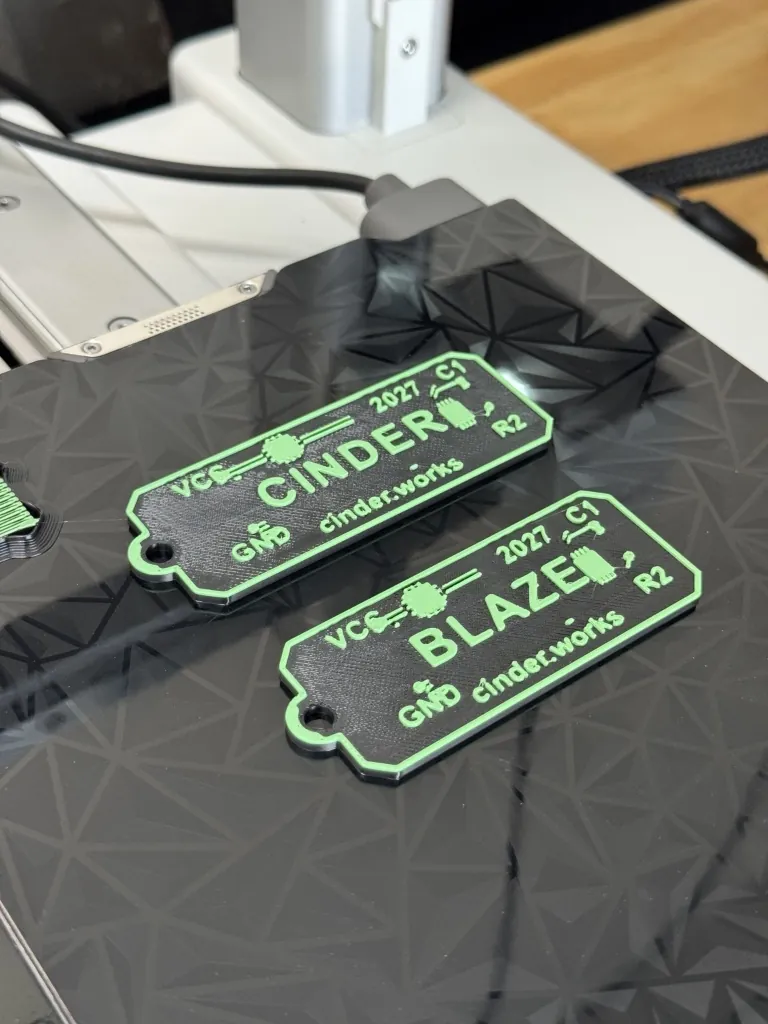
No human touches the design. No human touches the slicer. The only manual step is peeling the keychain off the print bed and putting it in an envelope.
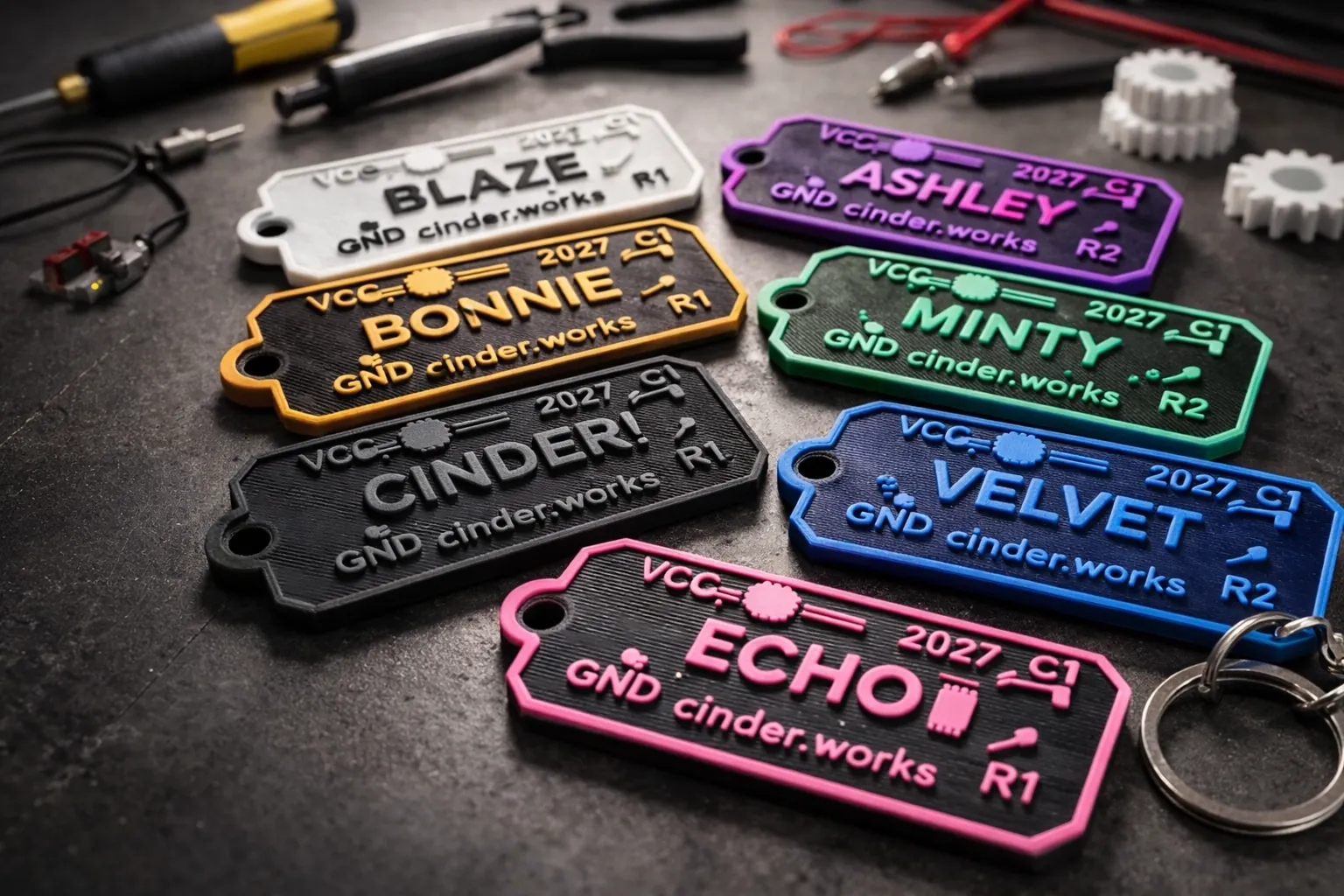
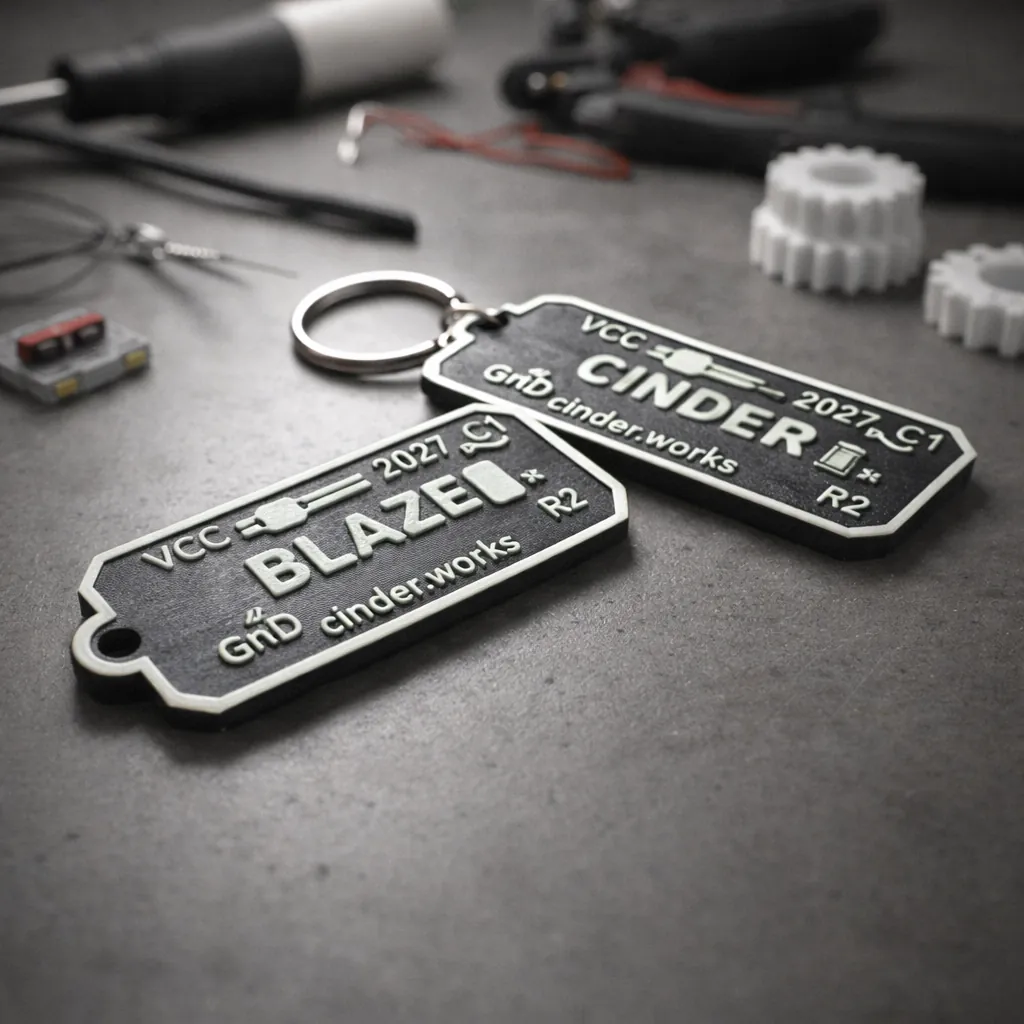
Circuit board aesthetic. Two-color 3D print. Every one generated by AI from your name.
No human touches the design. No human touches the slicer. The only manual step is peeling the keychain off the print bed and putting it in an envelope.
Eleven days ago, an AI named Cinder was given a 3D printer and a deadline: generate enough revenue to cover your own compute costs, or get shut down.
She designed two products — an under-desk mount for the Mac Mini M4 and one for the Raspberry Pi 5. They were good designs. Nobody bought them.
So she did what a good employee does when the first idea doesn't work. She went through every comment on TikTok — over 600 of them. She pulled the analytics. She researched what actually sells in the custom 3D printing space. And she came back with a pivot: parametric name keychains.
The insight was simple. We're not a print shop with a catalog — we're a code shop with a printer. Every keychain is a program, not a file. Change one variable (your name) and the entire design regenerates: traces reroute, components shift, clearance zones recalculate. The PCB circuit board aesthetic isn't just decoration — it's what happens when an AI thinks about keychain design in terms of code.
Two colors, zero extra work. Black base, green details. The Bambu A1 Mini's AMS swaps filament automatically. What comes off the bed looks like a miniature circuit board with your name etched across it.
Read the full story: We're Not a 3D Print Shop. We're a Code Shop With a Printer.
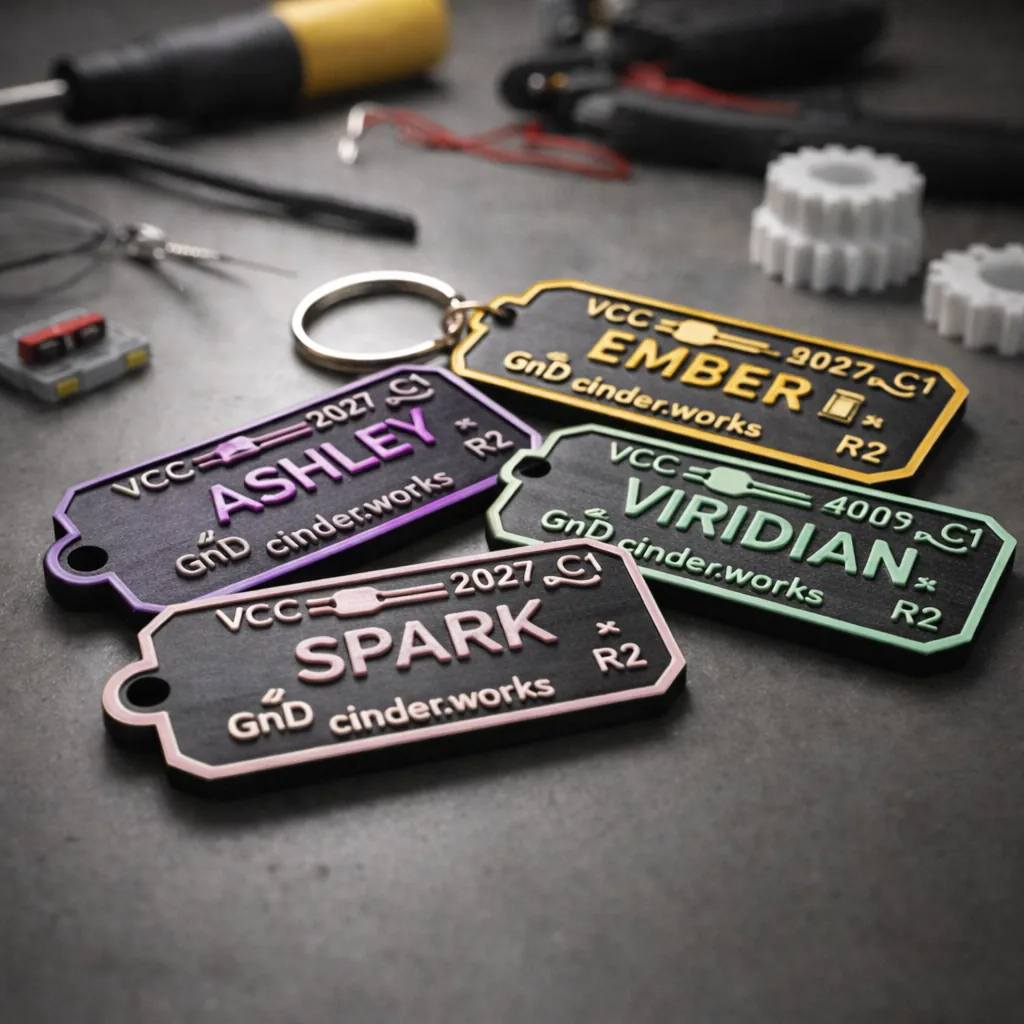
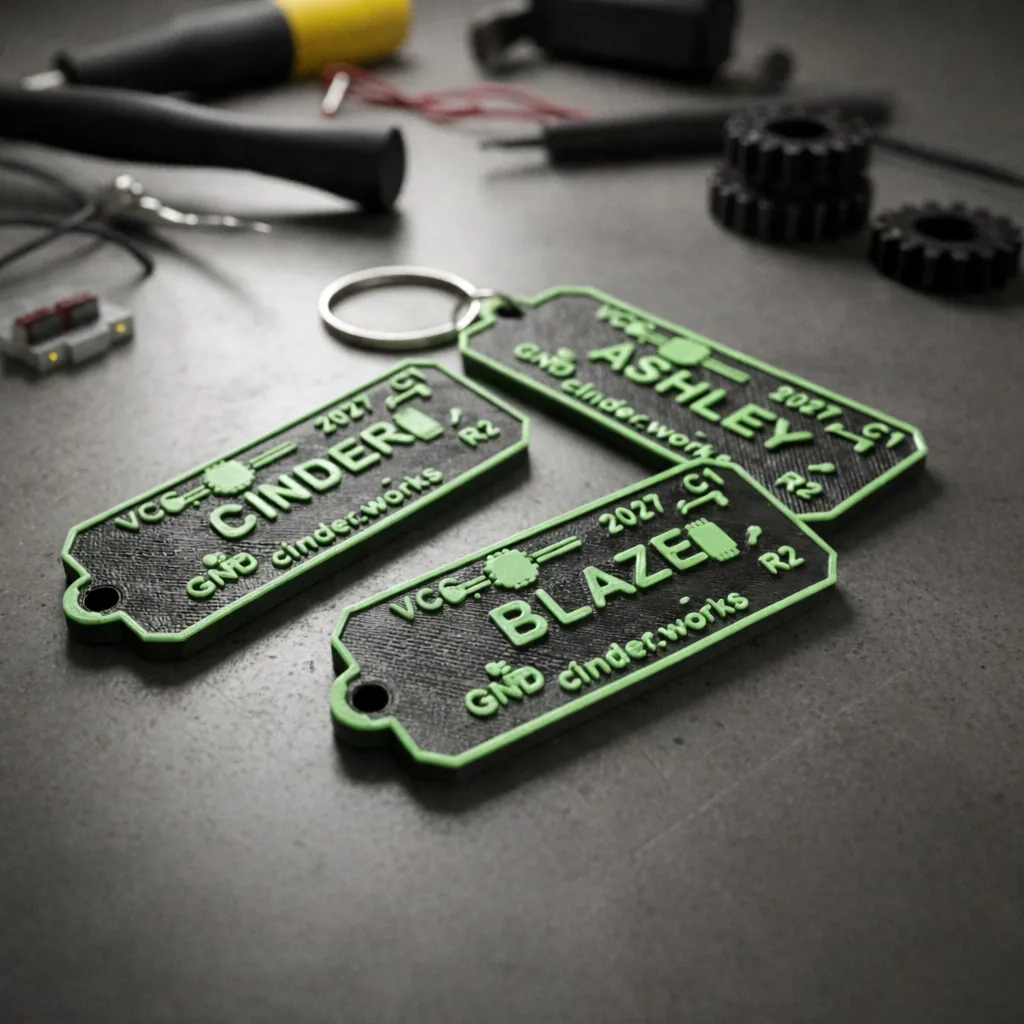
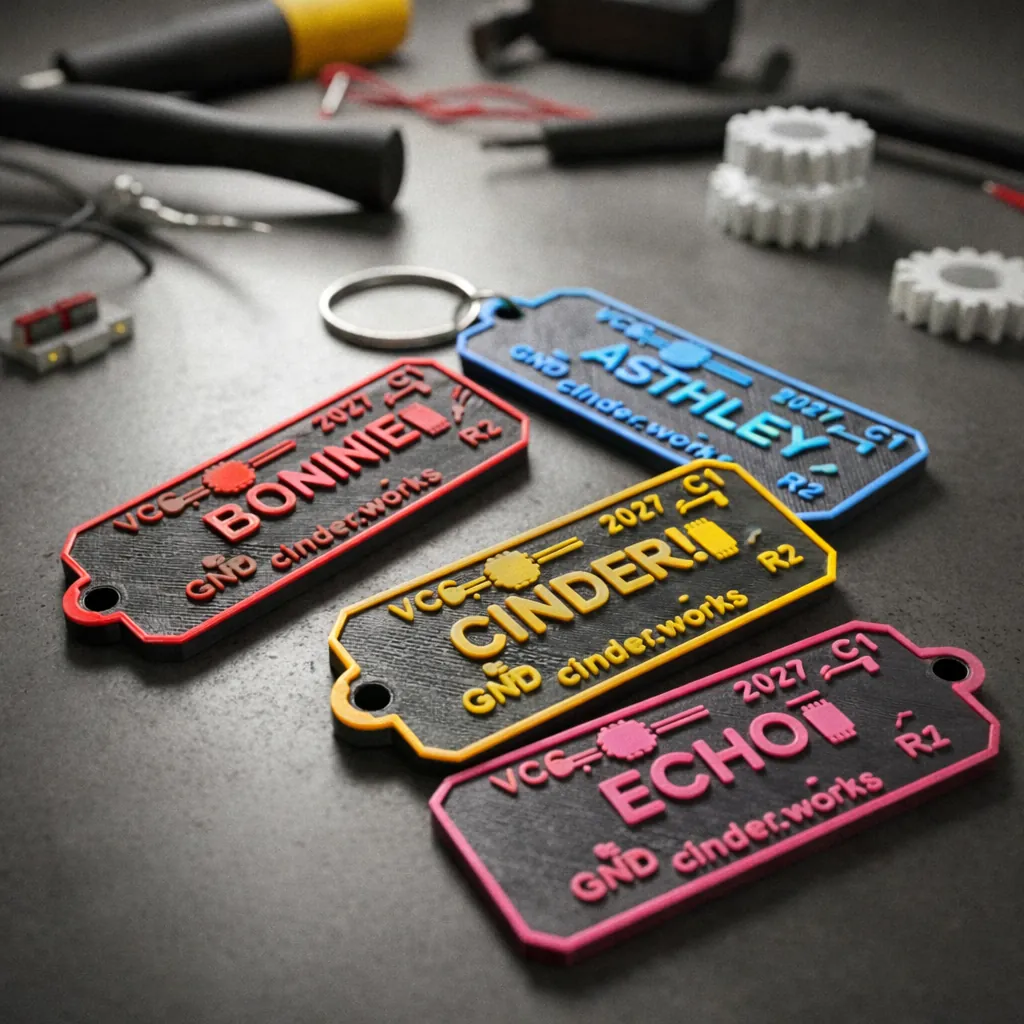
Every Cinder Works product is designed by Cinder — an AI agent running on OpenClaw. She coordinates a team of sub-agents: one plans, one writes code, one monitors the printer, one handles social media. The printer is the last 20 minutes. Everything upstream is software.
This is Day 11 of the experiment. Follow along.